


The Post-Purchase Experience: The Untapped Revenue Engine for Ecommerce Brands
You've done the hard work. You ran the ads, optimised your product pages, nailed the checkout flow — and the order came through. Most ecommerce brands treat that moment as the finish line. The ones that are winning in 2026 treat it as the starting gun.
The post-purchase experience — everything that happens after a customer clicks "buy" — is one of the most underleveraged growth levers available to small and medium ecommerce businesses. And unlike customer acquisition, it costs a fraction of the price.
Why Most Brands Miss It
The average ecommerce brand spends 80% of its marketing budget attracting new customers, yet studies consistently show that selling to an existing customer is five to seven times cheaper than acquiring a new one. The irony is that the post-purchase window — typically the 24 to 72 hours after an order is placed — is when a customer's emotional engagement with your brand is at its peak. They're excited. They're paying attention. They're opening every email you send.
Most brands waste this window with a generic "Your order is confirmed" message and nothing more.
Four Moves That Change Everything
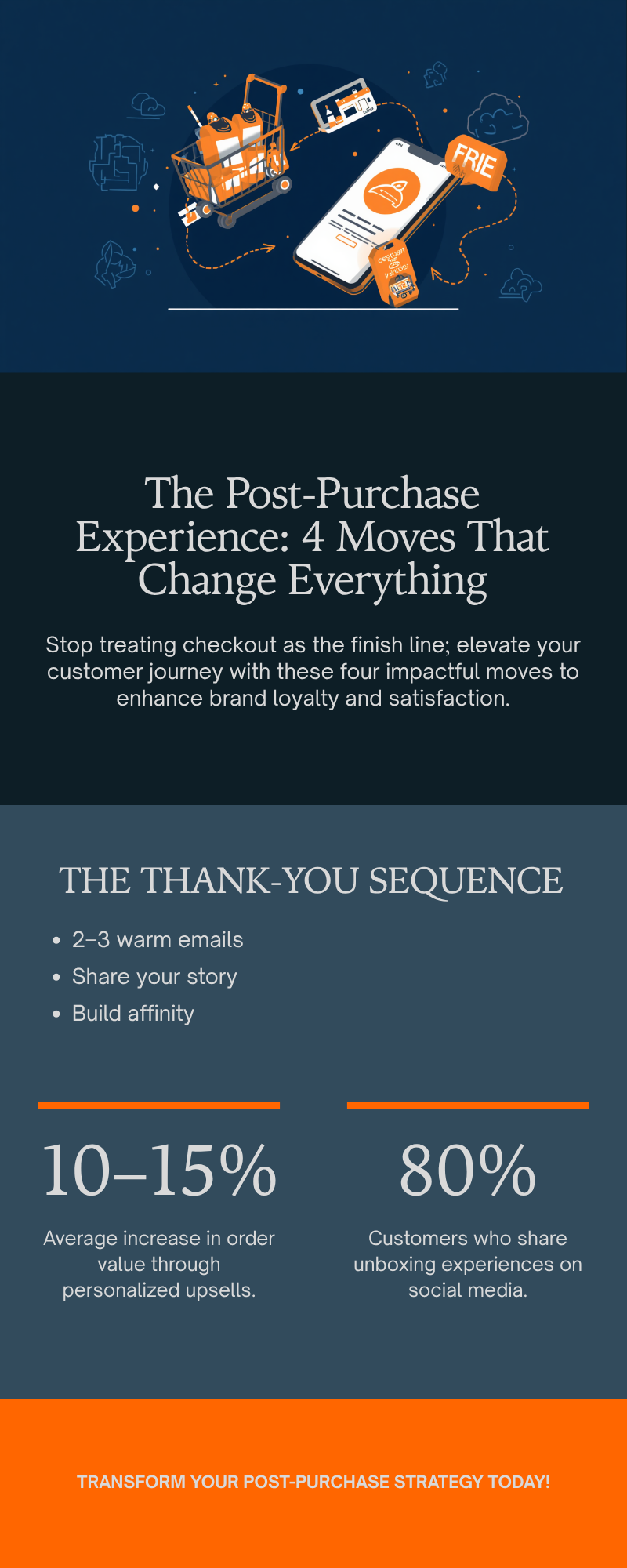
1. The thank-you sequence. A short, warm email sequence (two to three emails over 48 hours) that goes beyond logistics. Share the story behind the product. Give a care tip. Introduce them to your wider range. This builds brand affinity before the product even arrives.
2. Personalised upsells and cross-sells. Use order data to recommend genuinely relevant add-ons — not generic "customers also bought" noise, but curated suggestions tied to what they just purchased. Done well, this can add 10–15% to average order value with zero ad spend.
3. An unboxing moment worth sharing. Packaging that surprises and delights converts customers into content creators. A handwritten note, a small unexpected gift, or even thoughtful tissue paper and a QR code to an exclusive video can spark organic social sharing that no paid media budget can replicate.
4. The review and referral ask. Timing matters. Ask for a review three to five days after estimated delivery — when the customer is using the product and still in a positive mindset. Pair the review request with a referral offer: a discount for them and a friend. This single touchpoint can drive both social proof and new customer acquisition simultaneously.
Where to Start
You don't need a huge tech stack to do this well. An email platform with basic automation, a Shopify or WooCommerce store, and a clear customer journey map are enough to build a post-purchase experience that outperforms most of your competitors.
The brands growing fastest right now are not the ones with the biggest ad budgets. They're the ones who've realised that the customer relationship doesn't end at checkout — it begins there.
Ready to build a post-purchase strategy that works? At New Popin, we help ecommerce brands design customer journeys that turn one-time buyers into loyal advocates.
What Tools Actually Work
The good news is you don't need expensive enterprise software to get started. For most small and medium ecommerce businesses, three categories of tools do the heavy lifting:
Email automation platforms — Klaviyo, Mailchimp, or Omnisend handle the thank-you sequence and review requests automatically once set up. Most offer templates specifically for post-purchase flows that take under an hour to configure.
Product recommendation engines — apps like LimeSpot, Frequently Bought Together, or native Shopify recommendations power the personalised upsell. The key is setting rules based on category logic and complementary products, not just raw sales volume.
Review management tools — Yotpo, Judge.me, or even a simple Google Review link embedded in your post-purchase email. The timing and personalisation of the ask matter far more than which platform you choose.
Measuring Whether It's Working
Most brands track revenue and ad spend obsessively but neglect the post-purchase metrics that signal long-term health. Add these four to your dashboard:
Repeat purchase rate — what percentage of first-time customers buy again within 90 days? Industry average sits around 25–30%. Anything above 40% suggests your post-purchase experience is building genuine loyalty.
Customer lifetime value (CLV) — if your CLV is growing quarter over quarter without a matching rise in acquisition costs, your retention engine is compounding. This is the clearest signal that you've built something durable.
Net Promoter Score (NPS) — a single survey question sent 14 days post-delivery tells you more about customer sentiment than any ad metric. Brands with high NPS grow organically through referrals, not just paid acquisition.
Average order value on second purchase — customers who return and spend more than on their first order are showing trust signals. If second-order AOV is lower, something in the post-purchase experience is deflating perceived value before they come back.
The brands winning on Amazon and DTC in 2026 are not just the ones with the best products — they're the ones who treat the moment after the sale as seriously as the moment before it. Start small, measure everything, and iterate fast.
Get in touch at newpopin.com to find out how we can help.
Add comment
Comments